About Med Foresight

Built by a gastroenterologist who lived the problem.

Med Foresight was started because the people building it had spent two decades watching electronic health records take time away from patients — not as observers, but as the physician in the room.

Meet our founders

Med Foresight was started by two co-founders — one who practiced medicine for 22 years, and one who has spent his career building large-scale data and AI systems for institutions that depend on getting them right.

Dr. Pallavi Patel

Co-founder · Clinical

22 years practicing gastroenterology. Every clinical decision in the product passes through her.

Kaiser PermanenteGastroenterologist
22 years
Indiana UniversityAssistant Professor
Faculty

Washington University in St. LouisGastroenterology fellowship

Leads the clinical work — what surfaces in a chart summary, how the AI handles diagnostic uncertainty, when the product should defer to physician judgment.
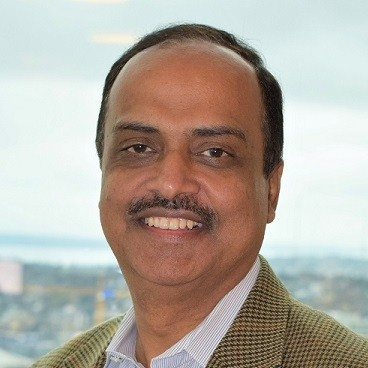

Ujjwal Sinha

Co-founder · AI architecture

A career building large-scale AI systems for institutions that cannot afford to get them wrong.

TargetLed analytics & AI
Most recent
Boston Consulting GroupManaging Director & Partner
BCG
Microsoft · McKinseyEarlier roles in engineering & strategy
Earlier
Venture-backed companyPresident
Operator

Leads the AI architecture — the proprietary medical language model, its validation, and the integration with hospital systems.

How we work.

A few principles shape how Med Foresight is developed, validated, and deployed. They are not slogans. They determine what we ship and what we will not.

01

The physician reviews everything

Med Foresight produces drafts, summaries, and answers. The treating physician reviews and approves every output before it enters the patient record. The AI does not write into the chart unsupervised — the physician carries clinical responsibility.

02

Pilot before scale

We work with a pilot GI practice before we expand. We measure what happens — physician time saved, summary accuracy, override rates — and we are honest about where the product defers.

03

Compliance is built in, not added later

Med Foresight is built to support HIPAA-compliant workflows and works with HL7 and FHIR interfaces. The product is designed to be reviewed by a compliance team, not to surprise one.

04

Built for the full visit, not just one feature

The chart summary and physician chatbot are live today. They are the first two capabilities of a system being built across the full GI visit cycle — preparation, consultation, follow-up.

A medical record that finally serves the physician.

US physicians spend approximately half of their working time inside electronic health records.1 At national scale, that represents roughly $200 billion in lost productivity each year. Behind that number is something simpler: time that should have gone to patients.

The vision Med Foresight works toward is not new. The medical community has discussed it for more than a decade — a record that anticipates clinical need rather than burying it.2 The question is no longer whether such a system should exist. The question is whether it can be built with the care that medicine requires.

Med Foresight does not aim to solve healthcare. It aims to give physicians back the parts of their day that should never have been taken from them.

1  Annals of Family Medicine, September 2017.2  CRICO, “Better Safer Care: Imagining a Medical Record of the Future,” November 2012.

Med Foresight is built to support HIPAA-compliant workflows and works with HL7 and FHIR interfaces.

HIPAA Compliant
HL7
FHIR